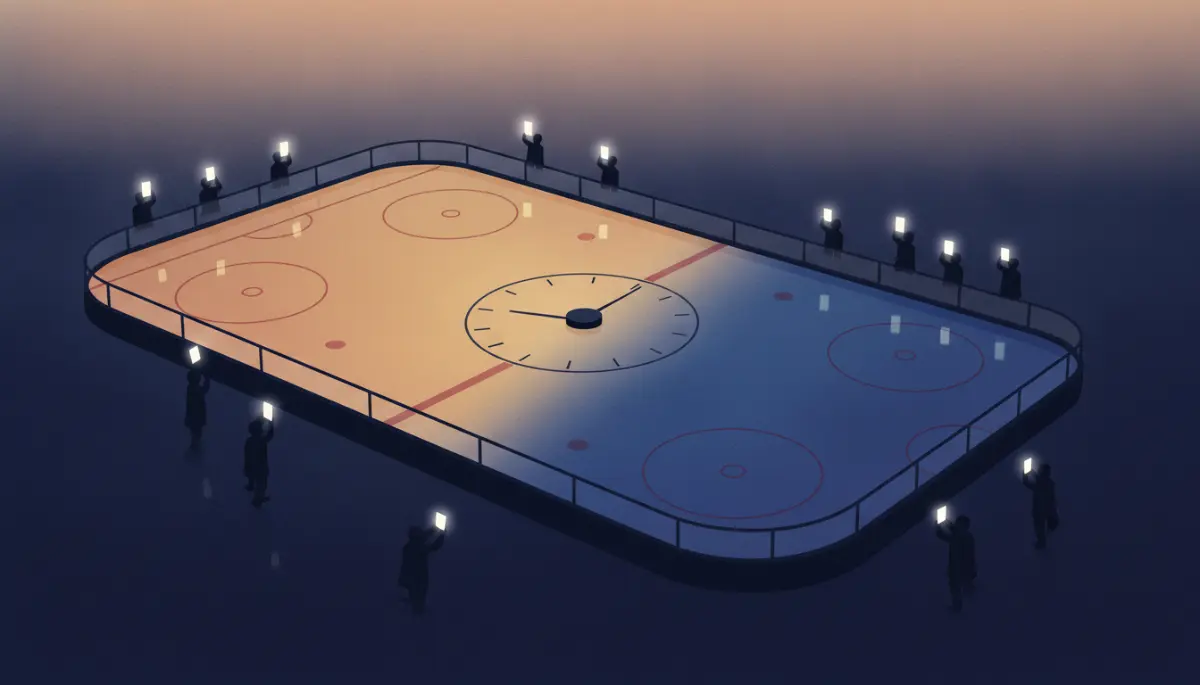
Western Canadian hockey fans are heading into a season with a different relationship to the clock. Beginning November 1, 2026, Alberta, British Columbia and Manitoba will remain on daylight time instead of moving back by one hour, while Yukon already follows a permanent daylight-time system. Most other provinces will continue changing their clocks, and Saskatchewan will remain on permanent standard time, as it has since 1966.
The result is a narrower time difference between Western Canada and regions that still switch clocks. That adjustment may sound minor, but it affects puck drops, television windows, family attendance and the length of hockey nights throughout the 2026–27 season.
Why NHL Start Times Are Changing
The NHL calendar is shaped heavily by national broadcasts and time zones. Approximately 60 to 70 per cent of the regular season takes place during the period when much of Canada observes standard time, which runs from November 1, 2026, to March 14, 2027 for the 2026–27 schedule.
Previously, an Eastern game scheduled for 7 p.m. often began at 5 p.m. or 5:30 p.m. in Alberta. Once Alberta stays on daylight time, that same matchup starts at approximately 6 p.m. or 6:30 p.m. Mountain Time. The reduced time gap makes the game easier to place within Eastern broadcast plans, but it removes part of the early-evening cushion Western viewers once enjoyed.
Broadcasters and the league have therefore had to balance local convenience with national programming. Possible consequences include more games overlapping, later Western starts designed to protect television slots and fewer opportunities for the classic two-game evening lineup.
Calgary Becomes the Centre of the Late-Night Debate
The Calgary Flames illustrate the change particularly clearly. Eight games are scheduled to begin at 9 p.m. local time, with two of those contests taking place at home on December 26 and January 16. At the same time, Calgary has eight afternoon games beginning at 2:30 p.m. or earlier, up from five during the 2025–26 season.
That creates a schedule with wider swings than many fans are accustomed to. A supporter may attend an early afternoon game one weekend and then face a late-night finish the next time the Flames play at the Saddledome.
Flames president and chief executive officer Robert Hayes has described the situation as outside the club’s control. His point reflects the larger reality: provincial policy determines the clock, while the league and its broadcast partners determine when the hockey is played.
NHL commissioner Gary Bettman has expressed a similar position, indicating that the league will manage the consequences of the time change in the same way it handles other circumstances beyond its authority.
Family Attendance and Fan Accessibility
A 9 p.m. puck drop can be difficult for families, particularly when travel, school and bedtime routines are involved. Flames player Strome, whose children are six, five and two, has said that his kids would like to attend games but cannot reasonably manage those late starts. As a result, some family tickets may go unused.
The problem extends beyond the arena. A game that finishes after 11 p.m. can be challenging for younger viewers watching from home, while an even later conclusion may be unrealistic on a school night. Hockey can remain highly popular, but inconvenient timing may prevent casual viewers and families from following a full game live.
Edmonton has emphasized a similar concern from the opposite direction. Oilers president and chief revenue officer Stew MacDonald has said that preserving access for fans throughout Oil Country remains a key priority.
Different Effects in Winnipeg and Vancouver
Manitoba’s decision produces a different result for the Winnipeg Jets. When the province joins the Eastern time zone on November 1, the NHL shifts 12 Jets home games by one hour. Even after the adjustment, no Winnipeg home game begins later than 7:30 p.m. local time.
Jets supporters will still encounter late starts when the team travels west. The most prominent examples include:
- A 10 p.m. road game against the Vancouver Canucks on February 13.
- A 9:30 p.m. matchup against the Utah Mammoth on December 2.
For Alberta viewers, West Coast games involving Calgary, Edmonton or Vancouver can run well beyond midnight. A contest that begins around 9:30 p.m. Alberta time may not end until after 12 a.m., especially when overtime, stoppages or a lengthy intermission are involved.
What Western Fans Should Plan For
The new arrangement will not affect every game in the same way. Instead, viewers will notice several recurring patterns throughout the winter:
- Later home starts: Calgary has eight 9 p.m. local puck drops, including two at the Saddledome.
- More afternoon hockey: The Flames have eight games starting at 2:30 p.m. or earlier, providing better options for families and younger fans.
- Earlier Eastern games by Alberta’s clock: Matchups played in the east will generally begin around 6 or 6:30 p.m. Mountain Time.
- Longer West Coast evenings: Some road games may continue past midnight in Alberta.
- Darker mornings: Calgary and Edmonton can expect winter sunrises near 9 or 9:30 a.m., with northern communities such as High Level and Fort McMurray seeing later daylight.
These changes may also affect arena transportation, childcare arrangements, restaurant traffic and the routines of fans who commute to games. A late start is not merely a television issue; it can influence whether attending in person is practical.
Alberta’s Policy Debate Is Not Finished
Premier Danielle Smith has indicated that Albertans could express their views at the ballot box next year if the permanent daylight-time arrangement proves unpopular. The province previously held a referendum in 2021, when voters narrowly rejected a permanent change.
That earlier result suggests that the debate will continue beyond one hockey season. Supporters may welcome brighter evenings, while opponents may focus on dark winter mornings and the effect on children, commuters and outdoor routines.
A New Routine for the Hockey Calendar
Players may find that the adjustment becomes routine once the game begins, but fans experience the change before and after the opening faceoff. They will have to check whether a matchup is an afternoon contest, a conventional evening game or a 9 p.m. start that stretches deep into the night.
Permanent daylight time demonstrates how closely professional sports depend on broadcast schedules and regional clocks. For Western Canadian hockey audiences, the 2026–27 season will be a practical test of whether established viewing habits can adapt when the calendar no longer shifts twice a year.