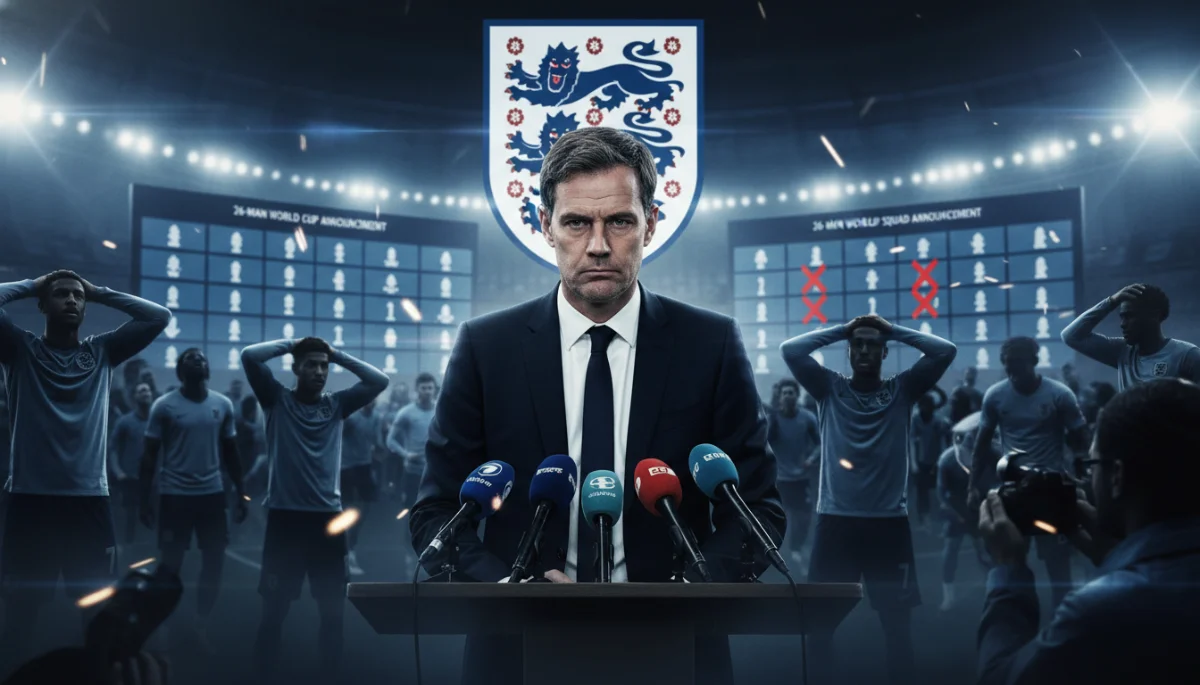
Thomas Tuchel has turned England’s World Cup buildup into an instant talking point, making a set of selections that few expected and leaving several established stars out of the final 26-man group for the tournament in North America. The announcement arrived with little softness and plenty of conviction, which only made the reaction more intense.
Tuchel did not pretend the process would be easy. He has been open about liking difficult calls, and this squad showed exactly what he meant. Some of the names omitted would have seemed close to untouchable only a short time ago, but the England manager clearly prioritized balance, form, and continuity over reputation.
The biggest surprises
The most eye-catching absences are Cole Palmer, Phil Foden, Trent Alexander-Arnold, and Harry Maguire. Each one brings a different kind of surprise, but together they create the impression of a major reset rather than a cautious trim. Palmer and Foden were perhaps the most striking omissions because both have carried high expectations for England and appeared likely to shape the team’s attack for years to come.
Their club seasons, however, did not help their cases. Chelsea and Manchester City both saw uneven spells from the pair, and Tuchel was also dealing with a crowded attacking pool. With so many players competing for limited roles, the final picture tilted against them.
Alexander-Arnold’s exclusion was easier to imagine, though it still carries weight because of his quality and experience. The Real Madrid defender has not added to his England total since last summer, and a lack of recent camp involvement left him short of momentum. Maguire’s omission also hit hard. He said on social media that he was shocked and gutted to miss out, which reflected the mood around a decision that many fans will debate for a long time.
Who made the cut instead
There were also selections that will please supporters who wanted some variety. Ivan Toney’s return stands out immediately. Now with Al-Ahli in Saudi Arabia, he offers a different forward option behind or alongside Harry Kane and gives England another proven goal threat. His inclusion suggests Tuchel wants more than one way to break down opponents.
The final squad also rewards several younger or less established players who have impressed in recent camps. Djed Spence, Kobbie Mainoo, Eberechi Eze, Noni Madueke, Jarell Quansah, and John Stones all survived the cut, signaling Tuchel’s belief that the group needs both energy and familiarity. The overall shape of the roster feels deliberate: enough experience to stay steady, enough freshness to keep the side flexible.
| Category | Notable inclusions | Major omissions |
|---|---|---|
| Attack | Harry Kane, Ivan Toney, Bukayo Saka, Marcus Rashford | Cole Palmer, Phil Foden |
| Defense | John Stones, Reece James, Ezri Konsa, Djed Spence | Trent Alexander-Arnold, Harry Maguire |
| Midfield | Declan Rice, Jude Bellingham, Eberechi Eze, Kobbie Mainoo | Adam Wharton, Morgan Gibbs-White |
Tuchel’s selection logic
Behind the headlines, Tuchel’s explanation pointed to chemistry as much as talent. He said the conversations with players who missed out were difficult, and in some cases painful, but he also made it clear that many of them had done enough to deserve inclusion. That tension is part of what makes squad selection so ruthless: strong performers can still lose out if the overall balance is not right.
He also leaned heavily on the group that performed well during the September, October, and November international windows. Those camps gave England a steadier identity, and Tuchel appears eager to preserve that rhythm rather than rebuild from scratch. In his view, familiar relationships matter, especially when the margin for error at a World Cup is so small.
Another factor was positional balance. Tuchel noted that he did not want to carry several players for the same role if it meant forcing someone into an unnatural position. That philosophy helps explain some of the tougher calls and suggests he values functional structure over simply collecting names.
What it means for England
The reaction will not calm down quickly. Supporters will argue over the omissions, especially those who expected Palmer, Foden, or Alexander-Arnold to be central figures. Yet Tuchel has made his position plain: this is the group he trusts to perform together, not the one that would generate the easiest headlines.
England’s squad now feels like a bet on stability with a few bold adjustments layered in. If the team performs well in North America, Tuchel will be praised for clarity and decisiveness. If it stumbles, the debate over the players left behind will only grow louder. For now, the manager has chosen conviction over caution, and the World Cup will reveal whether that approach was right.