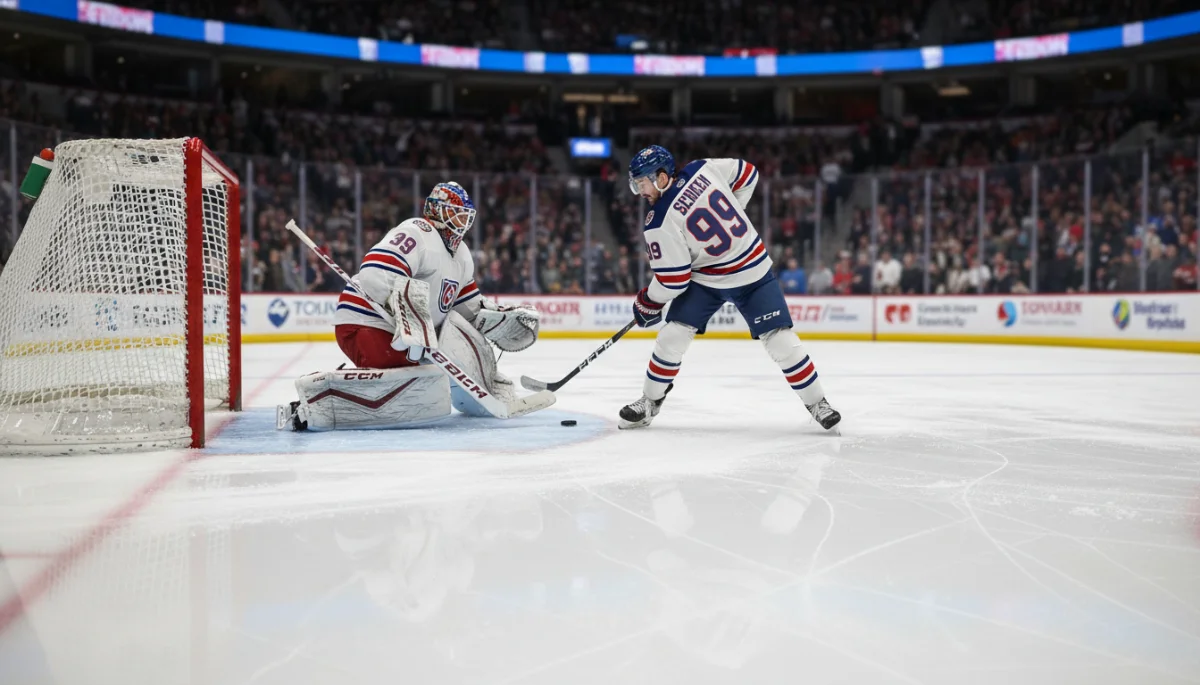
The Carolina Hurricanes arrived in the Eastern Conference Final with a spotless postseason record and the confidence that comes with it. Then Montreal stepped into Raleigh and ripped up the script. The Canadiens did not nibble at the edge of the series opener; they seized it early, stayed on the attack, and left with a 6-2 win that turned a heavy favourite into a team searching for answers.
What made the result so striking was not just the margin. It was the way Montreal controlled the pace after absorbing an early punch, the way its skaters turned pressure into instant offence, and the way Carolina’s usual structure looked stretched and slow. This was not a lucky bounce game. It was a hard, direct statement.
Early damage changed the mood fast
Carolina struck first when Seth Jarvis scored just 33 seconds in, a start that should have settled the home side and fed the crowd. Instead, it seemed to wake Montreal up. The Canadiens answered with a level of calm that bordered on rude. Cole Caufield tied the game, Phillip Danault put Montreal ahead on a clean breakaway, and Alexandre Texier extended the lead before the period was halfway done.
By the time Ivan Demidov added another goal, the Hurricanes were no longer chasing one mistake. They were trying to survive a flood. Montreal scored four times in the opening period and made Carolina look flat in its own zone, which is exactly where the Hurricanes are usually most dangerous.
A first-period scoring burst
| Time | Goal | Result |
|---|---|---|
| 00:33 | Seth Jarvis | 1-0 Carolina |
| About 03:00 | Cole Caufield | 1-1 |
| 04:00 | Phillip Danault | 2-1 Montreal |
| 08:00 | Alexandre Texier | 3-1 Montreal |
| 11:32 | Ivan Demidov | 4-1 Montreal |
Montreal found the soft spots
The Canadiens did not beat Carolina by playing a reckless game. They beat the Hurricanes by finding the weak points in a very aggressive system. Carolina’s forecheck is designed to pin teams deep, squeeze outlets, and force rushed decisions. Montreal responded by moving the puck quickly, hitting supporting skaters in stride, and using the middle of the ice before pressure could fully arrive.
That approach mattered because Carolina’s defence was trying to hold the line at the blue line and keep play in Montreal’s zone. When those pinches missed, the Hurricanes gave up open ice the other way. The Canadiens took full advantage, creating odd-man rushes and breakaways that turned a tight series opener into a runaway.
Jake Evans said the execution was sharp right from the start, and that was clear in the way Montreal supported each breakout. Passes arrived on time, decisions were simple, and the rush game stayed efficient. Carolina, by contrast, looked hesitant and a step behind.
Goaltending told part of the story
Frederik Andersen entered the series in outstanding form, carrying video-game numbers through the playoffs. He had been one of Carolina’s biggest strengths, but Game 1 gave him little help. Montreal kept finding clean looks, and the defensive breakdowns in front of him made each save harder than it should have been. He finished with five goals against on 21 shots, which was a brutal night for a goalie who had looked nearly untouchable.
At the other end, Jakub Dobes absorbed the early goal and settled in. He stopped 24 of 26 shots and gave Montreal exactly the kind of steady response a road team needs in a conference final. Once the Canadiens built their lead, Dobes did not allow Carolina a clean path back into the game.
The final period sealed the message
Carolina did manage another goal through Eric Robinson, but it never really felt like a comeback threat. Montreal answered with more depth and more control, and Juraj Slafkovsky finished the job with two third-period goals, including an empty-netter that erased any remaining doubt. Nick Suzuki also played the role of quiet driver, collecting three assists and setting the pace for the Canadiens’ attack.
The final score said 6-2, but the deeper takeaway was about composure. Montreal looked rested in the right way, not the passive way. It played with urgency, speed, and confidence, then kept its shape when Carolina tried to push back.
What comes next
There is no reason to expect Carolina to repeat that kind of flat performance. Rod Brind’Amour’s group is too disciplined, too talented, and too proud for that. Game 2 will almost certainly bring a sharper forecheck, cleaner structure, and more pressure around the Montreal net.
Still, the Canadiens have already done something important. They have shown that their run is not built only on survival or emotion. They can skate with elite teams, punish mistakes quickly, and handle a hostile road setting without blinking. In a series that was supposed to test Montreal’s legs, Game 1 suggested something else entirely: the Canadiens may be arriving at full speed.