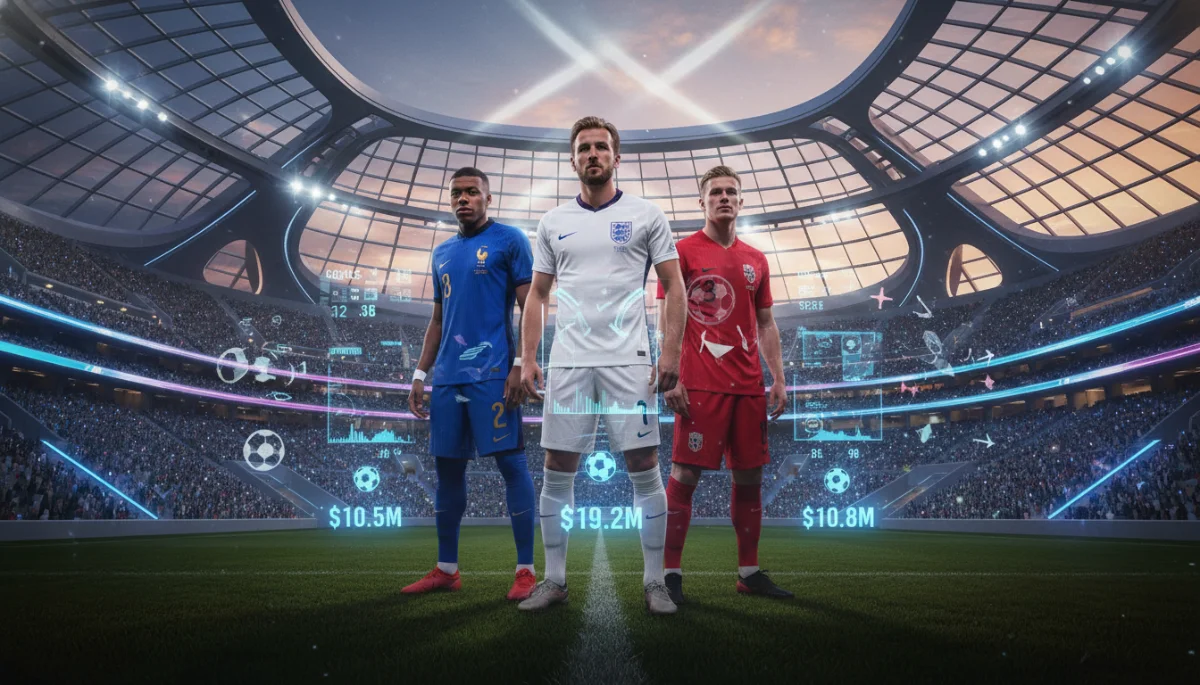
The official FIFA World Cup 2026 fantasy game has arrived, and it brings a fresh layer of strategy to the tournament, with Aramco backing the launch. Fans can now build a 15-player lineup, chase points across multiple leaderboards, and measure their choices against managers around the world.
Early buzz is already centered on the biggest names in the sport, with Erling Haaland, Kylian Mbappe, and Harry Kane expected to draw heavy attention. For managers, the real challenge is not just choosing stars, but fitting them into a tight budget while planning for a long competition.

How the game works
Success in the fantasy format depends on balancing star power with structure. Every squad must include 2 goalkeepers, 5 defenders, 5 midfielders, and 3 forwards, all selected within an initial $100 million budget. That budget rises by $5 million once the knockout rounds begin, giving managers a little more room to maneuver later in the event.
- Player prices stay fixed throughout the tournament, so there is no market movement to exploit.
- During the group stage, no team can have more than three players from the same nation.
- Managers may make unlimited changes before the opening match on Thursday, 11 June, and again before the Round of 32.
- Bench swaps and captain changes are available during active matchdays, which can make a major difference in close contests.
- Five boosters are part of the setup: Wildcard, 12th Man, Maximum Captain, Qualification Booster, and a Mystery Booster that will be revealed before the Round of 32.
That combination creates a format that rewards both short-term reaction and long-term planning. The best managers will think beyond individual matchups and build for the full tournament path.
Where the points come from
Fantasy scoring is tied closely to real match performance, which means nearly every action on the pitch can matter. Players earn value through minutes played, goals, assists, defensive work, and discipline, while negative events can quickly erase gains.
- Minutes played help establish a floor for steady scorers.
- Goals, assists, and shots on target drive the biggest offensive returns.
- Goals conceded, cards, and own goals can hurt defenders and goalkeepers.
- Penalties won or conceded are also tracked.
- Tackles and chances created give added value to all-around performers.
There are also special scoring bonuses. Direct free-kick goals bring extra reward, and a scouting bonus is available for a player owned by fewer than 5% of managers who produces more than four points in a match. That rule creates room for bold differentials, especially in deeper tournament stages.
Prices, power nations, and smart alternatives
The price list reflects global football hierarchy, and the most expensive players are concentrated among the strongest national teams. Haaland, Kane, and Mbappe sit at the top at $10.5 million each, while Lionel Messi and Cristiano Ronaldo are priced at $10 million. In defense, Portugal’s Nuno Mendes leads the position at $5.8 million, and the premium goalkeeping options include Ederson, Alisson Becker, David Raya, and Unai Simon.
The broader pricing pattern is just as revealing. Out of the 25 highest-priced players, 20 belong to the top six nations in the FIFA/Coca-Cola Men’s World Ranking, with England and France supplying five premium options each. That concentration makes those teams especially attractive, but it also increases competition for roster spots and can force difficult tradeoffs.
Historical note: Mbappe won the adidas Golden Boot at FIFA World Cup Qatar 2022™. The award began as the Golden Shoe in 1982, then adopted its current name in 2010 to honor the tournament’s top scorer, with Silver and Bronze Boots going to the runners-up.
For managers willing to look beyond the usual European favorites, the Confederation Challenge Leaderboard makes regional balance more important than ever. The strongest non-European picks include Mohamed Salah and Omar Marmoush for Africa, Son Heungmin and Salem Al Dawsari for Asia, Jonathan David, Raul Jimenez, and Christian Pulisic among the host nations, and Chris Wood as Oceania’s leading forward.