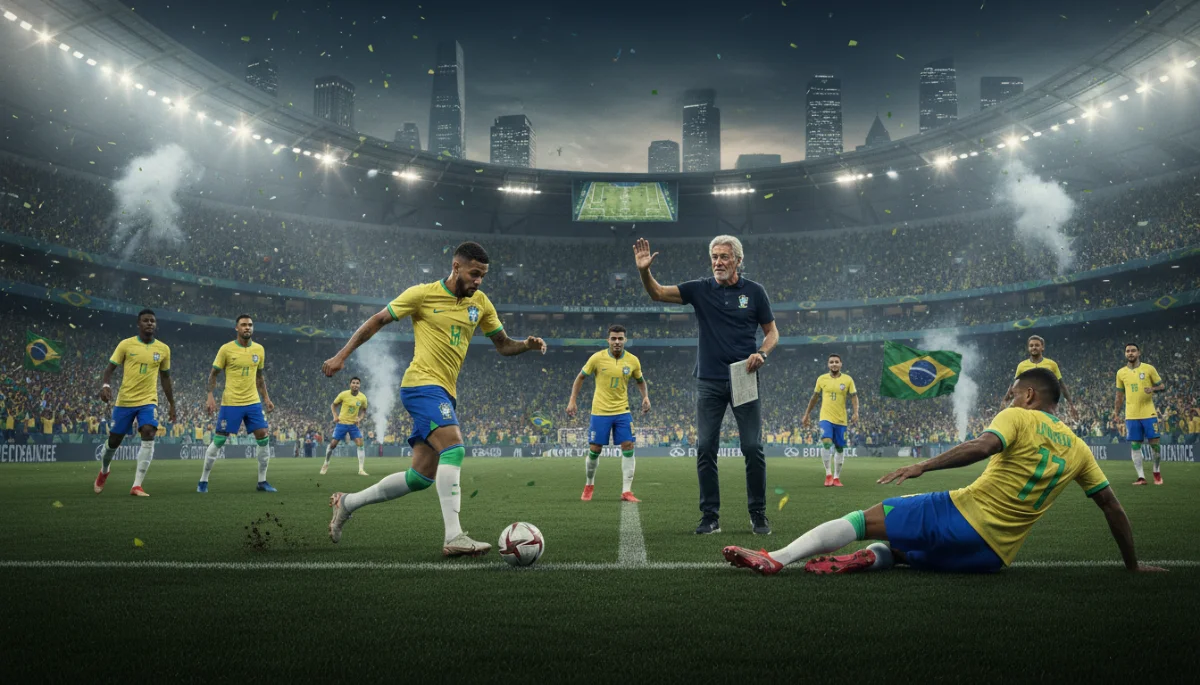
Brazil enters the 2026 World Cup with more expectation than certainty, and that is exactly why Carlo Ancelotti’s first tournament squad has drawn so much attention. The Italian coach is preparing to finalize a 26-player roster that blends proven leaders, high-end attacking talent, and a few bold decisions shaped by injury setbacks. For a nation still chasing its first title since 2002, every selection carries weight.
What Ancelotti is trying to build
Ancelotti has spent his career managing elite dressing rooms, but this assignment is different. Brazil is not asking for a long rebuild; it is asking for immediate results. That urgency explains why the squad conversation has focused on balance as much as star power. Brazil needs a side that can control matches, absorb pressure, and still create chances against the strongest opponents in the tournament.
The preliminary 55-man pool submitted to FIFA narrowed the field, but the final call is where the real story begins. The expectation is that Ancelotti will reward form, trust experience, and avoid overcomplicating the group. In practical terms, that means a stable spine, dependable fullbacks, and forwards who can stretch defenses in transition.
The names that look safest
A core group appears close to locked in, based on reporting from Brazil and Europe. The biggest certainty is in goal, where Alisson remains the clear No. 1. Behind him, Ederson offers elite backup quality and a very different passing profile, which gives Brazil tactical flexibility.
- Goalkeepers: Alisson, Ederson
- Center backs: Marquinhos, Gabriel Magalhaes, with Bremer and Leo Pereira providing depth
- Midfield core: Casemiro, Bruno Guimaraes, Lucas Paqueta
- Attack leaders: Vinicius Junior, Raphinha, Matheus Cunha, Gabriel Martinelli
Brazil also appears set to rely on Wesley at right back after Vanderson was ruled out, while Alex Sandro is the likeliest solution on the left. That kind of continuity matters because it lets the coach focus on chemistry rather than improvisation.
A quick look at the likely balance
| Unit | Likely anchors | What Brazil gains |
|---|---|---|
| Goal | Alisson | Reliability, command, and elite shot stopping |
| Defense | Marquinhos, Gabriel Magalhaes | Leadership and strong aerial presence |
| Midfield | Casemiro, Bruno Guimaraes, Paqueta | Protection, control, and progression |
| Attack | Vinicius Junior, Raphinha | Pace, unpredictability, and direct threat |
Injury losses that changed the picture
The squad conversation shifted sharply because several high-profile players are unavailable. Rodrygo is expected to miss the tournament after knee ligament surgery. Eder Militao is dealing with a longer-term knee problem, and Estevao Willian’s muscle injury removed one of the most exciting young options from the pool.
Those absences matter because they affect both depth and tactical variety. Rodrygo’s versatility would have helped in multiple roles, while Militao’s recovery removes a dependable defensive option. Estevao’s injury, meanwhile, eliminates a dynamic young attacker who could have added another layer of unpredictability.
The Neymar decision remains the headline
No name has shaped the discussion more than Neymar. He was included in the preliminary pool despite not appearing for Brazil since October 2023, when he suffered a serious knee injury against Uruguay. Even so, the logic behind his possible return is easy to understand. He is still Brazil’s all-time leading scorer, and his experience in major tournaments is unmatched within the current group.
Recent reports suggest Ancelotti is leaning toward selecting him, especially after the injuries to Rodrygo and Estevao. Neymar’s recent form with Santos has also strengthened his case, and the player himself has insisted that he feels physically ready. If he is included, the most vulnerable attacker may be Joao Pedro, even after an excellent club season in England.
Group C gives Brazil a favorable opening
Brazil’s path in Group C is attractive on paper, though no World Cup group should be treated casually. The Selecao will open against Morocco in East Rutherford, then face Haiti in Philadelphia, before closing the group stage against Scotland in Miami Gardens.
- June 13: Brazil vs. Morocco, MetLife Stadium, East Rutherford
- June 19/20: Brazil vs. Haiti, Lincoln Financial Field, Philadelphia
- June 25/26: Scotland vs. Brazil, Hard Rock Stadium, Miami Gardens
Morocco is the most dangerous opponent in the group, but Brazil will still expect to advance comfortably if it performs to its level. A first-place finish would likely produce a more manageable Round of 32 matchup against a third-placed team from another group.
How Brazil may line up
Ancelotti’s friendlies against France and Croatia offered a useful clue: Brazil may settle into either a 4-2-3-1 or a 4-3-3. Both systems fit the squad, and both allow the coach to keep his wide attackers high and dangerous.
One projected shape would look like this: Alisson; Wesley, Marquinhos, Gabriel, Alex Sandro; Casemiro, Bruno Guimaraes; Raphinha, Lucas Paqueta, Vinicius Junior; Matheus Cunha or Igor Thiago.
If Neymar is selected, he changes the equation immediately. He could compete with Paqueta as the central creator or operate as a false nine with Vinicius Junior attacking from the left. That kind of flexibility is one of the main reasons his possible inclusion has remained such a major talking point.
Why this squad matters so much
Brazil has spent more than two decades waiting for another World Cup crown. This squad is meant to end that drought, or at least prove that the country is once again close to the standard expected of it. With an established goalkeeper, a strong defensive base, and a forward line full of speed and invention, Ancelotti has the ingredients to build something dangerous.
The question is no longer whether Brazil has talent. It is whether the final 26 can become a team quickly enough to handle the pressure that always follows the yellow shirt. If the answer is yes, Brazil will arrive in the knockout rounds as one of the tournament favorites.